
By AJ Jaffari
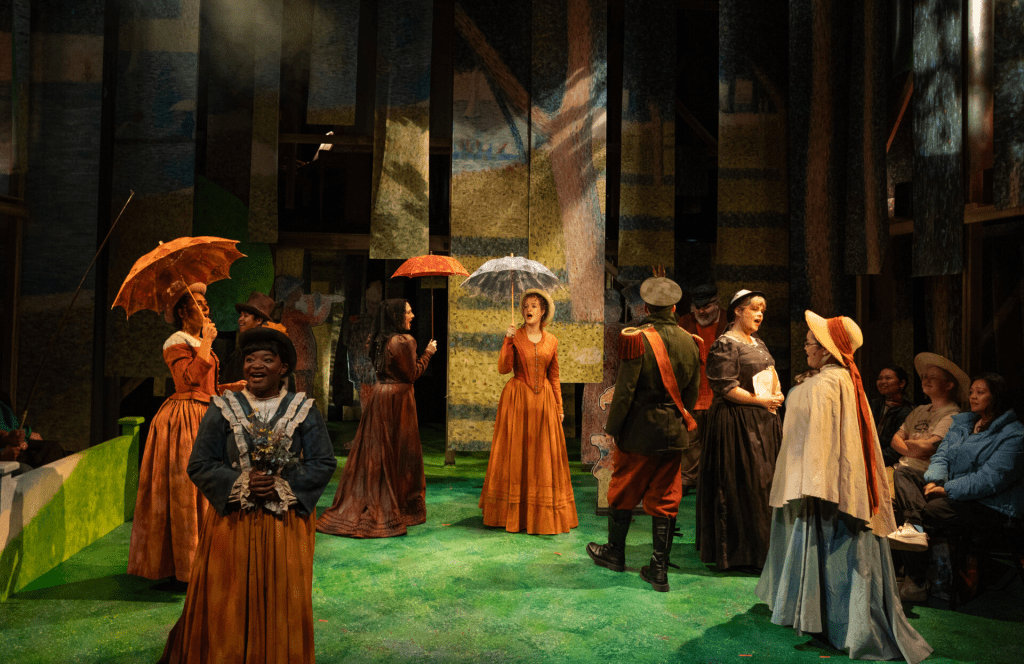
What happens when the pursuit of art begins to cost more than it gives?Shotgun Players’ Sunday in the Park with George dives headfirst into that question, offering a meditative and emotionally rich exploration of creativity, obsession, and the price of making something lasting. With music and lyrics by Stephen Sondheim and a book by James Lapine, the musical remains one of the most thoughtful examinations of the artist’s life—one that asks not only what we create, but who we leave behind in the process.
Inspired by Georges Seurat’s A Sunday Afternoon on the Island of La Grande Jatte, the story unfolds across two acts and two generations, following artists named George as they grapple with legacy, isolation, and the fragile balance between devotion to work and devotion to people. Shotgun Players embraces the show’s intimacy and complexity, inviting the audience into a world where art is both a refuge and a reckoning.
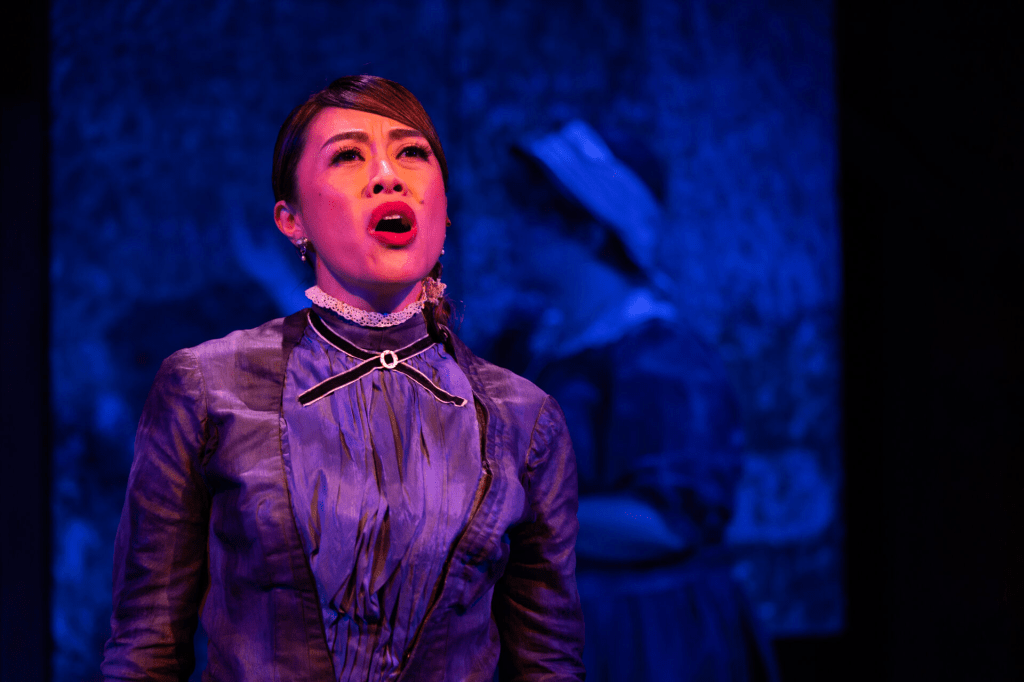
I had the privilege of attending an understudy performance for George, portrayed by Alex Rodriguez, whose voice truly impressed me in this demanding score. Sunday in the Park with George is notoriously challenging for a male-presenting role, requiring exceptional diction, control, and breath support, and Rodriguez met those demands with confidence and care. In that regard, several members of the cast stood out vocally. Marah Sotelo (Dot/Marie) blended beautifully with Rodriguez, leaving an impression in their final duet, “Move On,” which landed with clarity and warmth.
One thing I especially loved about this production (and honestly, about many Sondheim shows) is how the ensemble has just as much opportunity to shine as the principal characters. That absolutely rang true here, and it only made me want to see more interpretations of this show. By the time the show ended, I found myself just as impressed by the ensemble as I was by the leads. Every performer—understudies included—brought a distinct personality and sense of intention to the stage, creating a performance that felt richly layered and deeply grounded in the story being told.
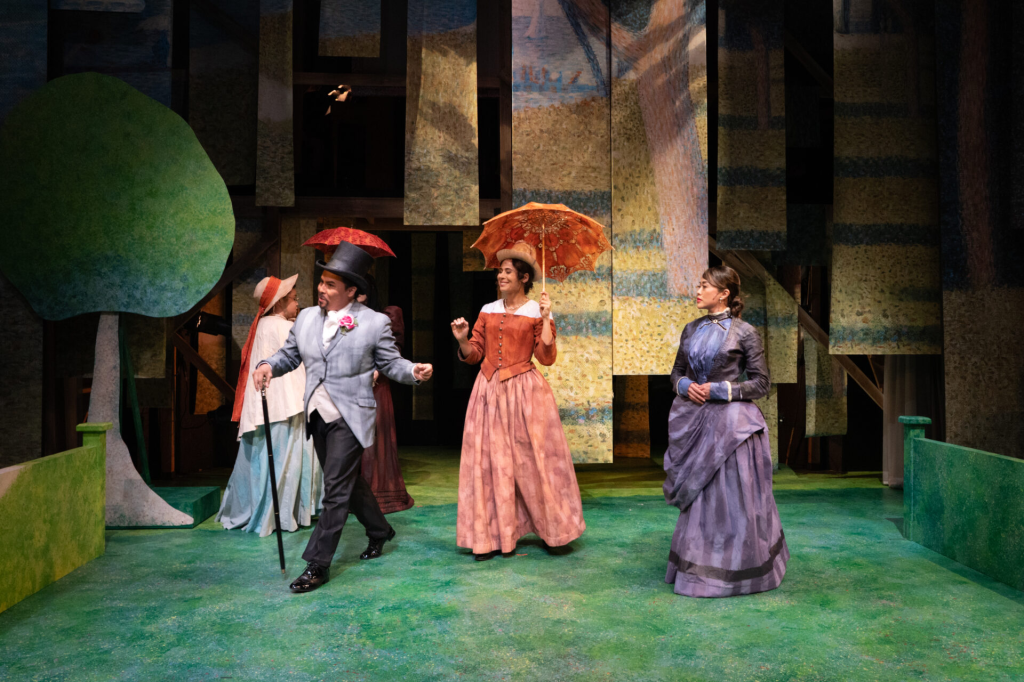
The production design for this show was nothing short of phenomenal. Beginning with Nina Ball’s set design, the deconstructed Seurat painting—brought to life through hanging canvases that shifted throughout the performance—felt both inventive and strikingly modern. The overall color palette of the stage echoed the iconic painting at the heart of the story, creating a visually rich environment that fully supported the world of the show.
This was paired beautifully with Sophia Craven’s lighting design, which featured some of my favorite uses of cool blues and warm tones, perfectly enhancing the depth and texture of the set. Madeline Berger’s costumes were equally thoughtful; several pieces felt stylistically spot-on and added another layer of visual storytelling that I truly enjoyed.
And finally, the orchestra led by David Möschler was simply spectacular—small but mighty, in the truest sense. At times, it felt like listening to a full symphony. Sondheim’s music is already exquisite, but it demands a sharp, intentional pit to carry its complexity, and this orchestra delivered brilliantly.
A quick note for anyone purchasing tickets: there are onstage seats available in a thrust-style configuration, some of which include light audience interaction. If that’s not your jam, consider this your friendly heads-up.
Additionally, the house is raked, with rows ascending as they move back, but the seating is not staggered. If you’re on the shorter side—or seated behind someone average to taller—you may experience a few obstructed sightlines at certain moments. For me, this was mostly noticeable during scenes where actors were seated onstage or when smaller set pieces came into play (such as the dog from the painting). It didn’t significantly detract from the experience, but it’s definitely something to keep in mind. I’d recommend sitting as far forward as possible—advice that, admittedly, goes against where Sarah and I usually like to sit.
That said, if you do attend (and I truly think you should), you’ll leave thoroughly impressed and captivated by this remarkable production.
Sunday in the Park with George runs through January 25 and tickets are available here.
 Broadway with AJ and Sarah
Leave a comment