
By AJ Jaffari
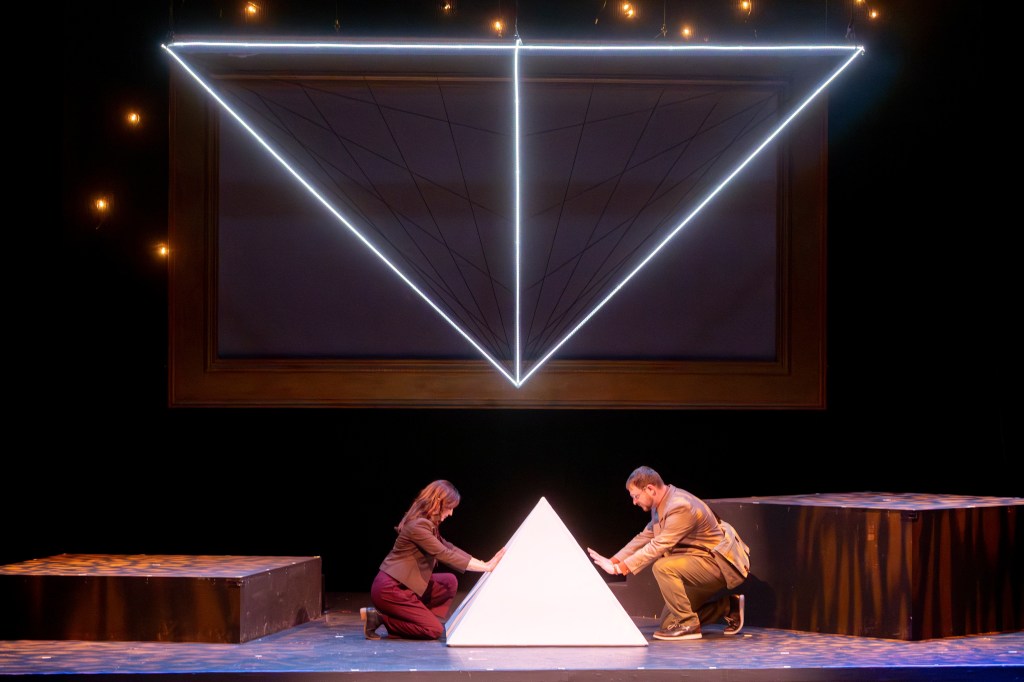
What happens when a bestselling thriller makes the leap from page to stage? The Da Vinci Code at Palo Alto Players showcases the widely known novel by Dan Brown into a fast-moving theatrical experience that leans heavily on mystery and puzzles. The production invites audiences into a world of hidden symbols, secret societies, and historical speculation, asking big questions while propelling the story forward at a brisk pace.
Following symbologist Robert Langdon and cryptologist Sophie Neveu, the play unfolds as a globe-spanning race to uncover long-guarded secrets. Palo Alto Players approaches the material with ambition, focusing on momentum as the narrative jumps from location to location. The result is a production that prioritizes storytelling and spectacle, setting the stage for an evening driven by discovery and suspense.
While I can appreciate the ambition behind bringing such a well-known thriller to the stage, this production ultimately didn’t fully resonate with me. That isn’t to say there wasn’t care or effort behind the work—rather, the storytelling style and pacing simply didn’t pull me in as much as others. As someone who tends to connect more deeply with character-driven narratives, I found it harder to emotionally invest in this stage adaptation, even as the plot continued to unfold at a rapid clip. With that being said, like every show I see at Palo Alto Players, there were several elements I found enjoyable and intriguing.
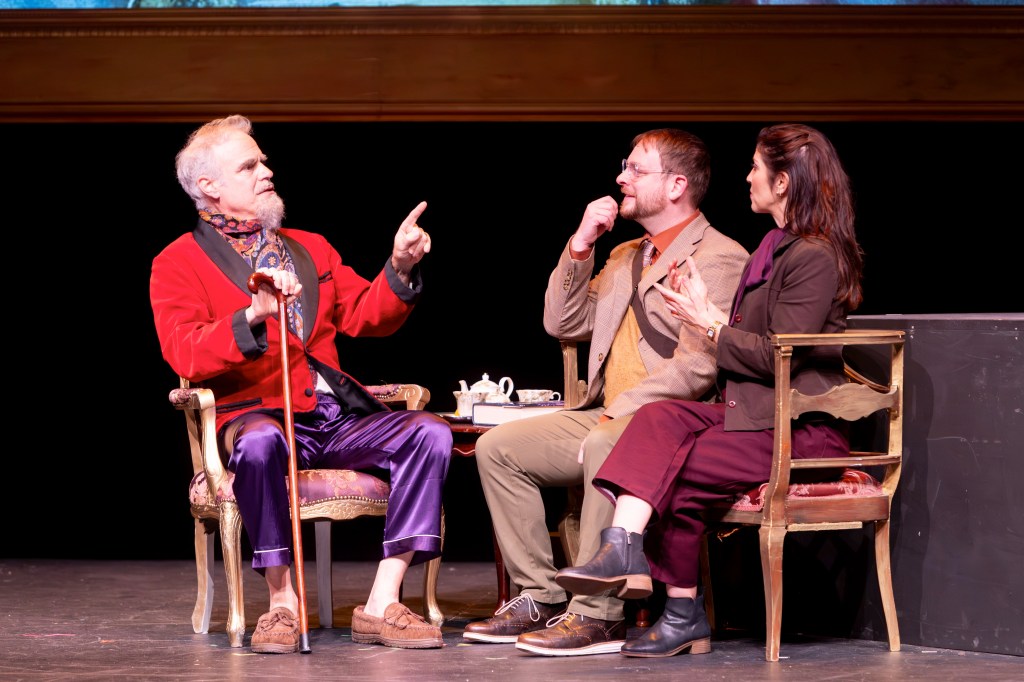
My standout performance in this production came from David Boyll, whose presence felt like a character pulled straight out of a Bond film. Without giving anything away for those who haven’t yet seen the show, Boyll navigated sharp character shifts with ease and precision, making each moment engaging and unpredictable. He was consistently compelling to watch and brought a welcome sense of energy to the stage.
I also want to give a well-deserved round of applause to Brandon Dean for his performance as Silas—a masterclass in balancing the line between villain and hero. His portrayal was nuanced and compelling, adding depth and complexity to a character that could easily be played one-note.
One element that truly impressed me in this production was the projection design by Tasi Alabastro, which painted a vivid sense of place and clearly guided the audience through the story. Projections can sometimes feel overwhelming or distracting, but these were thoughtfully executed—artistically smart, purposeful, and beautifully integrated into the production.
I also want to commend Patrick Klein’s set design. While it appeared simple on the surface, it proved to be highly effective, working seamlessly with the show’s sharp, fast-moving narrative. It allowed the story to move fluidly from moment to moment without unnecessary distraction.
Above all, I want to encourage continued support of live theatre. I recognize that I won’t connect deeply with every show I see (and sometimes that’s four in a single weekend!), but I have immense respect for the dedication and effort it takes to mount a production as complex as this one. That commitment is always worth celebrating!
The Da Vinci Code runs through February 1st and tickets are available here.
 Broadway with AJ and Sarah
Leave a comment