
By AJ Jaffari
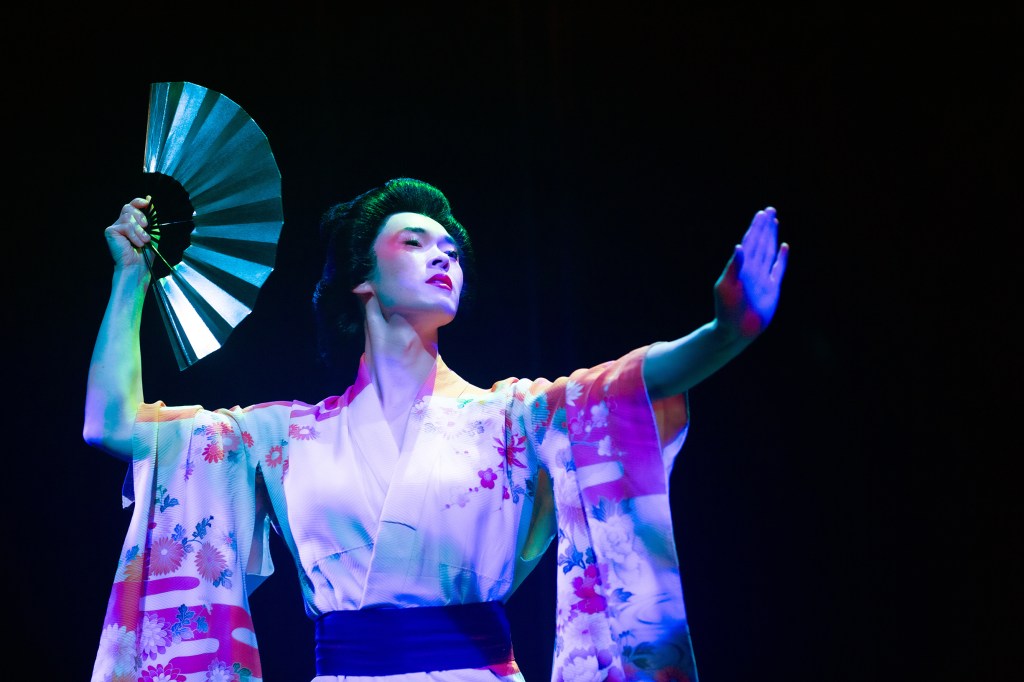
What happens when love is built on illusion—and the truth refuses to stay hidden? M. Butterfly at SF Playhouse unfolds as a haunting exploration of desire, identity, and the stories we tell ourselves to survive. David Henry Hwang’s Tony Award–winning play challenges assumptions about gender, power, and fantasy, blending political intrigue with deeply personal reckoning. It’s a piece that asks its audience not just to watch, but to question.
Inspired by real events and framed through memory and confession, the story follows René Gallimard, a French diplomat whose decades-long affair with a Chinese opera singer slowly unravels into revelation. As fantasy collides with reality, SF Playhouse leans into the play’s psychological tension and emotional complexity, crafting an experience that feels intimate, unsettling, and undeniably relevant.
I went in completely blind, as I usually do, and left feeling like I had witnessed a powerful exploration of symbolism, control, and the ever-relevant question of what defines a man. From the very beginning, I felt fully immersed in the world of the play. Act I moved with an intensity that left little room to breathe, while Act II slowed slightly in pace for me. That said, many plays from this era tend to unfold that way, so it didn’t diminish the strength of the performances. Just know going in that this is a substantial evening of theatre—clocking in at nearly three hours from start to finish.
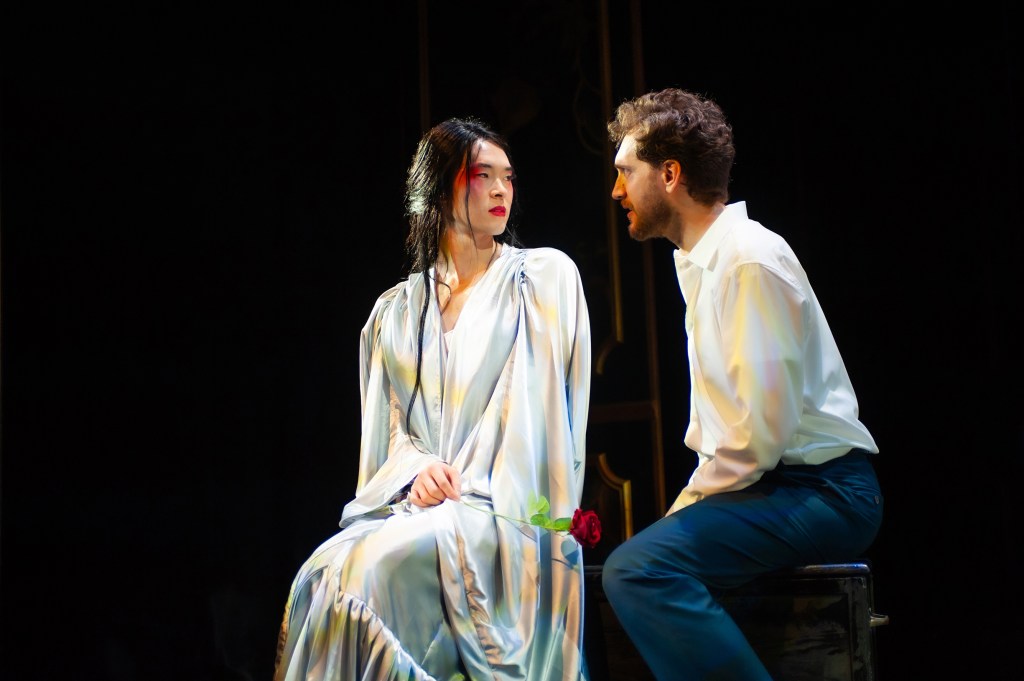
The two leads are equally compelling in this production. Dean Linnard takes on Gallimard—a character riddled with deeply flawed and often unredeemable qualities—with a bold, almost eccentric energy that makes the portrayal both unsettling and fascinating to watch. His choices felt intentional and layered, and his chemistry with Edric Young (Song Liling) grounded the emotional core of the piece.
Young, in particular, was extraordinary. It was nearly impossible to take your eyes off him. His stage presence carried a quiet magnetism that commanded attention without ever feeling forced. Every movement and line delivery felt precise and deliberate, making his performance both captivating and memorable.
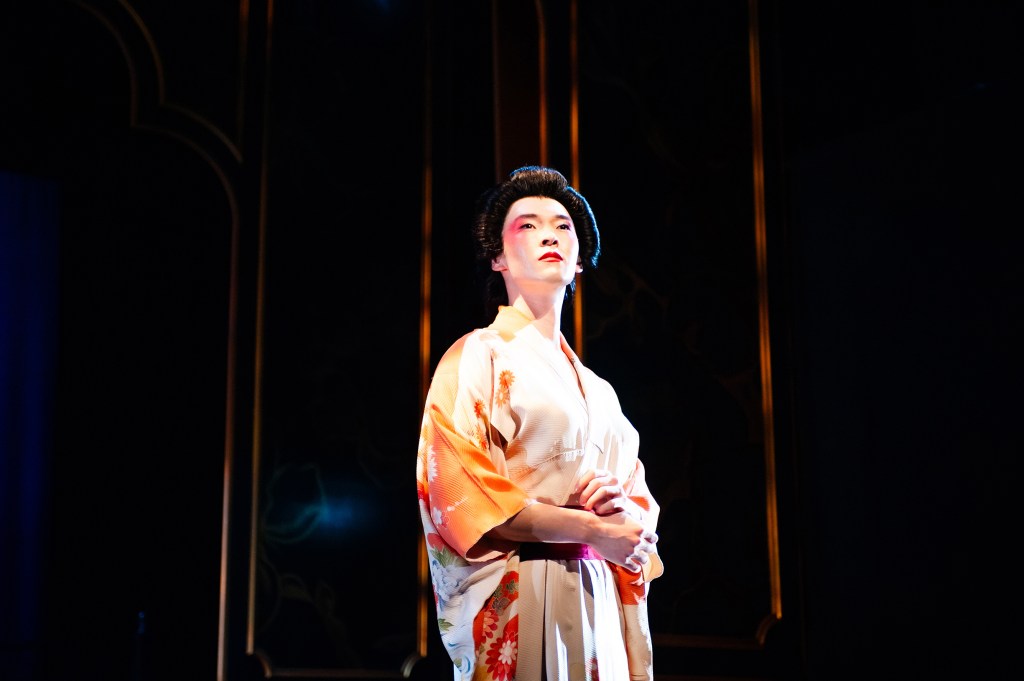
The production elements of this show each stood out in their own distinctive way. From the moment I took my seat, I was drawn to the stunning scenic design by Randy Wong-Westbrooke. The scenic painting, in particular, was beautifully executed, capturing the atmosphere and setting with remarkable detail and artistry. It immediately grounded the world of the play in something visually rich and transportive.
The costumes, designed by Keiko Carreiro, were equally impressive. I was especially taken with Song Liling’s looks, which added striking dimension to an otherwise muted color palette. Each piece felt intentional and layered, enhancing both character and storytelling. A special shoutout is also owed to intimacy coordinator Vicki L. Hoskins, who undoubtedly had a complex task in navigating the show’s deeply intimate and vulnerable moments with care and professionalism.
Finally, credit must go to director Bridgette Loriaux, who led this production with precision, sensitivity, and steady command. At times, it genuinely felt as though the actors were telling this story for the first time—a difficult illusion to sustain, and one this cast managed with impressive authenticity.
M. Butterfly runs through March 14 and tickets are available here.
 Broadway with AJ and Sarah
Leave a comment